

Don’t Wait for a Bite: Why Keeping Rabies Vaccinations Up to Date Matters
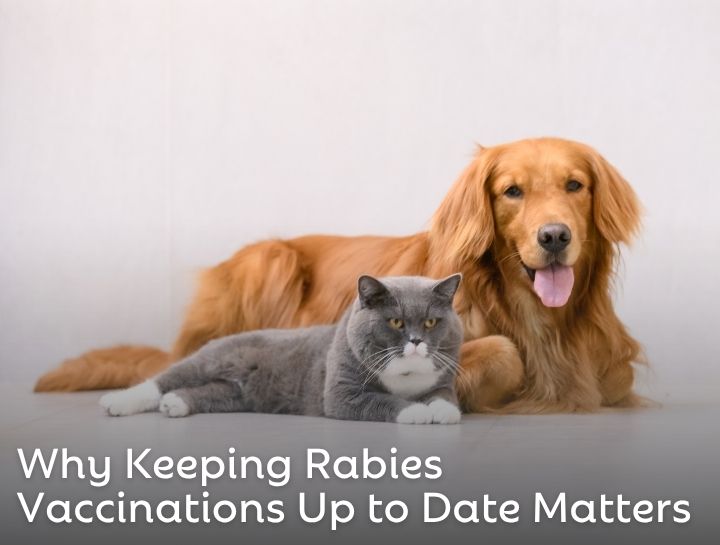
The threat of rabies is sometimes viewed by pet owners as a distant concern, yet it remains one of the most significant public health and animal welfare challenges globally. As a disease with a near 100% fatality rate once clinical symptoms appear, the decision to vaccinate is not just a routine check-up item—it is a life-saving necessity for your pet, your family, and your community.
Rabies Is 100% Preventable
Rabies is a virus that affects the central nervous system of mammals. It is most often spread through the bite of an infected animal. In the U.S. and Canada, wildlife such as bats, raccoons, skunks, and foxes are the most common carriers. Pets can be exposed if they come into contact with these animals, even briefly.
What makes rabies especially concerning is that once symptoms appear, there is no effective treatment. The focus is entirely on prevention, and vaccinations are highly effective at stopping the disease before it starts.
Key Prevention Tips & Facts
Vaccination schedule
Most pets receive their first rabies vaccination between 12 and 16 weeks of age, followed by a booster one year later. After that, boosters are given every 1 to 3 years depending on the vaccine and local regulations.
Know the signs of rabies
Early signs can be subtle and may look like a change in your pet’s normal behavior. Watch for:
-
Unusual anxiety, restlessness, or withdrawal
-
Increased irritability or aggression
-
Sensitivity to light, touch, or sound
-
Fever or decreased appetite
As the disease progresses, symptoms can include:
-
Difficulty swallowing or excessive drooling
-
Staggering, weakness, or lack of coordination
-
Paralysis, especially in the hind limbs
-
Seizures
-
Unusual vocalization or behavior that seems out of character
If you ever notice these signs, especially after a possible exposure, contact your veterinarian immediately.
Avoid contact with unfamiliar animals
Do not approach or handle unknown animals, even if they seem friendly. If you see an animal behaving strangely, such as appearing disoriented, unusually aggressive, or overly tame, contact your local animal control.
Protect your community
Keeping your pet up to date on rabies vaccinations helps protect not only your household, but also your neighbors, local wildlife, and the broader community.
Protecting the One Health Connection
The idea of One Health is simple but powerful. The health of people, animals, and the environment are all connected. What affects one can affect all. Rabies is one of the clearest examples of this connection.
When you keep your dog or cat up to date on their rabies vaccinations, you are not just protecting your own pet. You are helping create a barrier that keeps this deadly virus from ever reaching people. Because rabies can be transmitted through a bite, even one exposure can have serious consequences. Preventing that exposure in the first place is what keeps families and communities safe.
Public health efforts rely heavily on strong vaccination rates in pets. In many areas, rabies vaccinations are required by law for this reason. These laws are not just about individual pets, they are about protecting entire communities. Keeping accurate, up to date vaccination records also becomes incredibly important if your pet is ever exposed to a wild or unknown animal, as it can significantly impact the next steps in care and monitoring.
Beyond the Individual Pet
When a large percentage of pets in a community are vaccinated, it creates what we call a protective buffer. The virus has fewer opportunities to spread, which helps stop outbreaks before they start.
This protection extends beyond your own home. It helps safeguard:
-
Other pets in your neighborhood
-
Older animals or those with compromised immune systems
-
Veterinary teams, animal control, and others who work closely with animals
-
Local wildlife populations, by limiting the spread of disease across species
Rabies prevention is truly a community effort. Each vaccinated pet plays a role in keeping that protection strong.
Vaccination is also one of the most effective tools we have in medicine. It is safe, cost effective, and has a long track record of success. Most importantly, it offers peace of mind. Whether your pet is exploring the backyard, going on a hike, or simply enjoying a walk around the neighborhood, you can feel confident they are protected from a disease that is otherwise devastating.
Schedule Your Visit Today
Protecting your pet is one of the most meaningful ways you can protect your family and your community.
If you are unsure whether your pet is up to date on their rabies vaccination or if they are due for a booster, we are here to help guide you. Keeping vaccinations current is one of the simplest and most important steps you can take for their long-term health.
Please contact us at (386) 447-7381 to schedule your pet’s wellness exam and stay on track with their vaccinations.